
CheapGPT Explained: What It Is, What It Isn’t, and When “Cheap” Matters
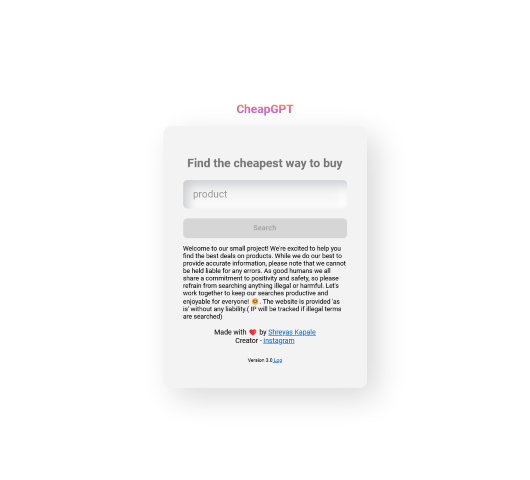
Short version: CheapGPT is a low‑cost interface for generating text with large language models. It focuses on affordability and accessibility rather than model leadership, guarantees, or enterprise‑grade reliability.
Scope note (Anti‑Hallucination Principle by Almma): This review describes CheapGPT based on publicly available information and observable positioning. It does not assume access to proprietary models, infrastructure, or official partnerships unless explicitly stated by the provider.
What CheapGPT Is (Plain‑Language Definition)
CheapGPT is positioned as a budget‑friendly way to generate AI‑written text. It targets users who want basic text generation capabilities at a lower price point than mainstream AI platforms.
The product emphasis is cost efficiency, simplicity, and ease of use — not cutting‑edge model performance or specialized task execution.
What CheapGPT Can Reliably Do
- Generate short‑form and medium‑length text from prompts
- Assist with drafting, rewriting, and idea generation
- Lower the cost barrier to experimenting with AI writing tools
For casual or exploratory use, these capabilities may be sufficient.
What CheapGPT Cannot Do (Important Limits)
- It does not guarantee accuracy or factual correctness
- It does not replace professional writing, legal, or research judgment
- It does not offer transparency into training data or model provenance
- It is not suitable for regulated, sensitive, or high‑stakes work
Lower cost often means fewer safeguards, weaker auditability, and limited accountability.
Who CheapGPT Is For — and Not For
Best Fit
- Individuals experimenting with AI writing for the first time
- Users who need low‑stakes drafts or brainstorming support
- Budget‑constrained creators prioritizing cost over control
Not a Fit
- Professional publishing or client‑facing deliverables
- Academic, legal, medical, or financial content
- Workflows requiring traceability, citations, or guarantees
- Organizations needing data governance or audit logs
Choosing “cheap” is reasonable — but only when the consequences of errors are low (Dignity Principle by Almma).
How CheapGPT Typically Works
- User enters a text prompt
- The system generates a response using a language model
- User edits, accepts, or discards the output
Public documentation does not clarify whether CheapGPT uses proprietary models, licensed APIs, or open‑source systems, nor how data is retained or reused.
Pricing & Access
- Pricing model: Low‑cost / budget‑oriented
- Exact pricing: Varies by plan and usage
- Account required: Yes
- Data handling transparency: Limited
Before using any low‑cost AI service, review its terms of service and privacy policy carefully.
Risks and Trade‑Offs
- Higher likelihood of hallucinated or incorrect output
- Limited accountability if content causes harm or errors
- Potential data retention or reuse concerns
- Ambiguity around model sourcing and updates
Cost savings often come with reduced visibility and safeguards.
Almma’s Take
CheapGPT can be useful for low‑risk drafting and experimentation. It should not be trusted as an authority, source of truth, or production‑grade writing system. When accuracy, responsibility, or accountability matter, price should not be the deciding factor.
Leave a Reply