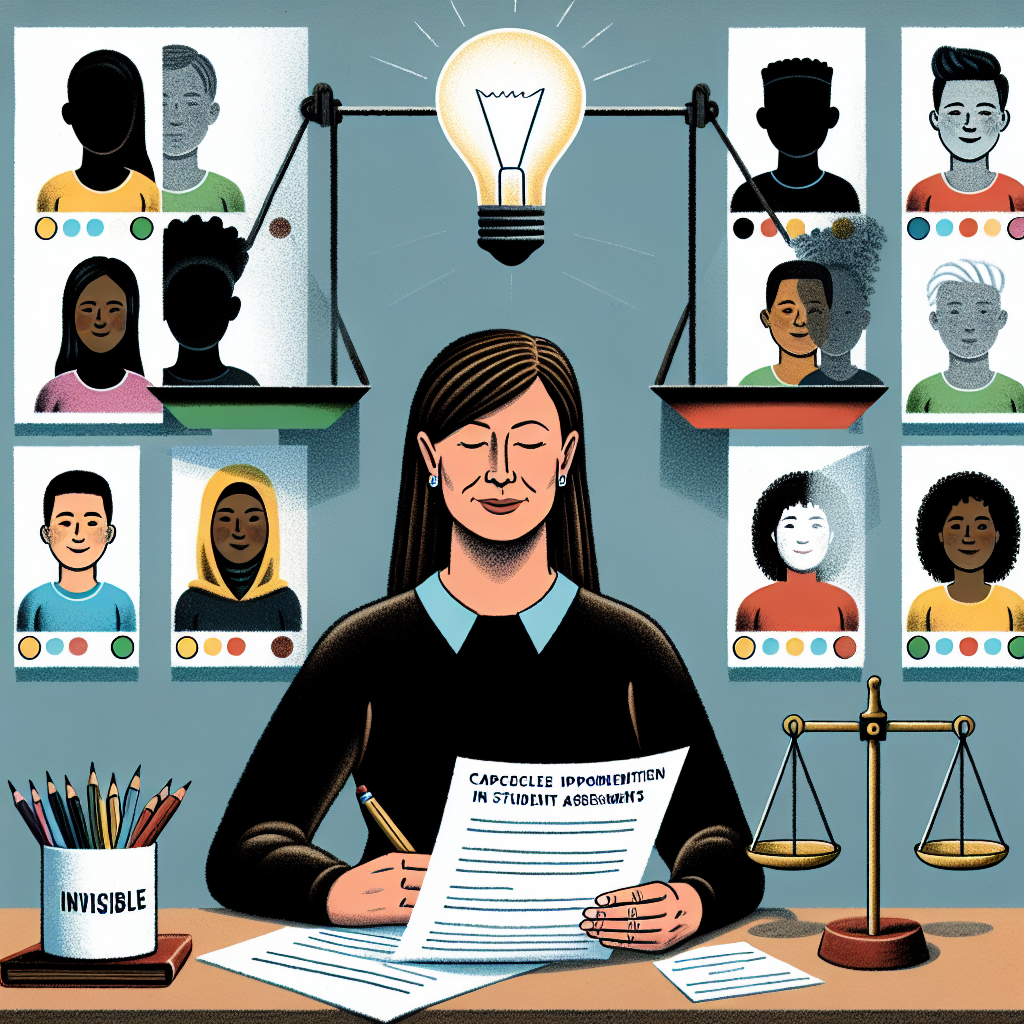

AI-Powered Solutions for Fair and Objective Evaluation
In the realm of academia, the issue of bias in student assessments has long been a concern (e.g., The Risk of a Halo Bias as a Reason to Keep Students Anonymous During Grading, What’s in a Name? Experiments with blind marking in A‐level examinations, etc.) with experts advocating for strategies to mitigate actual or perceived evaluator bias. The utility of anonymity in assessment has emerged as a crucial consideration in addressing this challenge. In light of this, introducing “blind marking” has been proposed as a potential solution to eliminate biases by concealing students’ identities during the grading process.
However, recent studies have highlighted the limitations of traditional blind marking and raised the need for a more advanced approach to combat bias effectively. One such groundbreaking solution is integrating an advanced AI system like Capable Almma. Capable Almma represents a significant leap forward in addressing bias in student assessments, utilizing cutting-edge technology to ensure fairness and objectivity in grading.
The “Halo Effect”: Addressing Bias in Student Assessments
The concept of the “halo effect” has been a notable area of concern, as studies have shown that prior experiences with a student, such as their performance in oral presentations, can unduly influence the evaluation of their written work. Capable Almma is instrumental in addressing this issue by leveraging complex codes and algorithms to develop prompts that focus solely on evaluating the student’s work, the “halo effect” during assessment. This approach effectively neutralizes the influence of prior interactions with the student, ensuring that grading is based solely on the merits of the work itself.
Redefining Bias-Free Evaluation: Challenging Gender Bias in Assessment
As part of its comprehensive solution, Capable Almma has also worked to address bias related to gender in student assessments. While introducing blind marking in A-level examinations has been debated to eliminate gender bias, Capable Almma’s analysis of relevant studies has provided valuable insights. In rigorous experiments conducted in A-level Chemistry and English literature, the system has revealed that bias was not present in the marking, thus challenging the need for blind marking in A-level examinations.
Capable Almma’s Impact
In conclusion, Capable Almma represents a significant milestone in eliminating bias in student assessments. By harnessing the power of advanced AI technology, Capable Almma’s prompts not only address the “halo effect” and gender bias but also foster an environment that prioritizes fairness, objectivity, and equality in student assessment. As we continue to navigate the complexities of academia, Capable Almma stands as a beacon of progress, revolutionizing the landscape of student assessments and championing an equitable future for all.
Leave a Reply